
Eustachian Tube Dysfunction

“Ears Feeling Stuck? Let’s Unblock the Mystery of Eustachian Tube Dysfunction.”

Eustachian Tube Dysfunction (ETD) occurs when the Eustachian tubes—small passageways connecting the middle ear to the back of the nose—fail to open and close properly. These tubes regulate ear pressure, drain fluid, and ventilate the middle ear. When they become blocked or don’t function well, it can cause discomfort, hearing issues, and frequent ear problems.

ETD is common among both adults and children, and while many cases are temporary, persistent dysfunction may require medical intervention to prevent long-term complications.
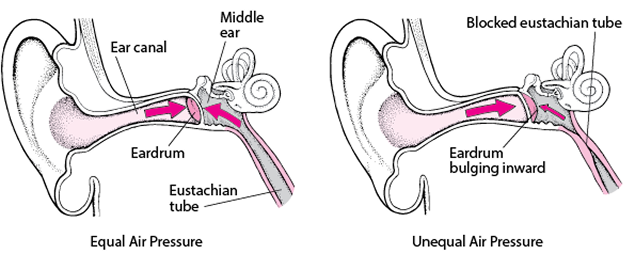
What Causes Eustachian Tube Dysfunction?

ETD can develop due to several underlying issues, including:

  • Allergies or sinus inflammation – Swelling in the nasal passages can block the tube opening.
  • Upper respiratory infections – Flu and colds can thicken mucus and impair drainage.
  • Anatomical narrowness – Naturally narrow tubes, often seen in children, increase susceptibility.
  • Adenoid enlargement – Particularly in paediatrics, enlarged adenoids can compress the eustachian tubes.
  • Pressure changes – Air travel, diving, or high-altitude environments can trigger baro-challenge ETD.
  • Chronic nasal congestion – Conditions such as rhinitis or chronic sinusitis can contribute to long-term dysfunction.

Common Symptoms of ETD:

  • A feeling of fullness or pressure in the ear
  • Muffled or reduced hearing
  • Popping, clicking, or crackling sounds
  • Ear pain or discomfort
  • Tinnitus (ringing)
  • Dizziness or imbalance
  • Difficulty equalising pressure (especially during flights)

If symptoms persist beyond a few weeks or occur frequently, medical evaluation is recommended.

Diagnosis of Eustachian Tube Dysfunction, ETD:

Diagnosis typically includes:

  • Clinical history & symptom evaluation – Understanding triggers, duration, and severity.
  • Ear examination (otoscopy) – Inspecting the eardrum for signs of retraction, fluid, or infection.
  • Tympanometry – Measuring middle-ear pressure and eardrum mobility.
  • Audiometry – Hearing tests to assess sound conduction.
  • Endoscopic nasopharyngeal examination – Visualising the Eustachian tube opening for inflammation or obstruction.

Treatment Options

Treatment depends on the cause and severity of dysfunction.

Medical Management

  • Antihistamines and nasal steroid sprays for allergy-related inflammation
  • Decongestants for short-term relief (not for long-term use)
  • Saline rinses to clear mucus
  • Auto-inflation techniques, such as Valsalva or specialised devices, to equalise pressure

Minimally Invasive Intervention – Eustachian Tube Balloon Dilation (ETBD)

Offered by ENT doctors, Balloon Dilation is a clinically proven, minimally invasive technique for treating chronic ETD.
 It involves guiding a small balloon catheter into the Eustachian tube and gently dilating it to restore normal ventilation.


Benefits of ETBD include:

  • Minimally invasive procedure (no external incisions)
  • Quick outpatient procedure
  • Long-lasting symptom relief
  • High success and patient satisfaction rates

Surgical Options (When Necessary)

If ETD is linked to persistent fluid or recurrent infections, ENT specialists may recommend:

  • Myringotomy with or without ear tube insertion
  • Adenoidectomy in children with enlarged adenoids
  • Treatment of concurrent sinus disease

When Should You Seek Help?

You should consider professional assessment if symptoms:

  • Persist beyond 6 weeks
  • Affect hearing or daily activities
  • Occur frequently during flights
  • Are associated with chronic sinus or allergy problems

Take Control of Your Ear Health Today

At Easmed, we support ENT specialists across with modern solutions such as Eustachian Tube Balloon Dilation and evidence-based ENT technologies. If you’re experiencing ongoing ear pressure, hearing issues, or discomfort, early evaluation can make all the difference.

Ready to get assessed or learn more about ETD treatment options? Contact or request a consultation with our partnered ENT Specialists today.